

Collection Scoring
Collection Scoring
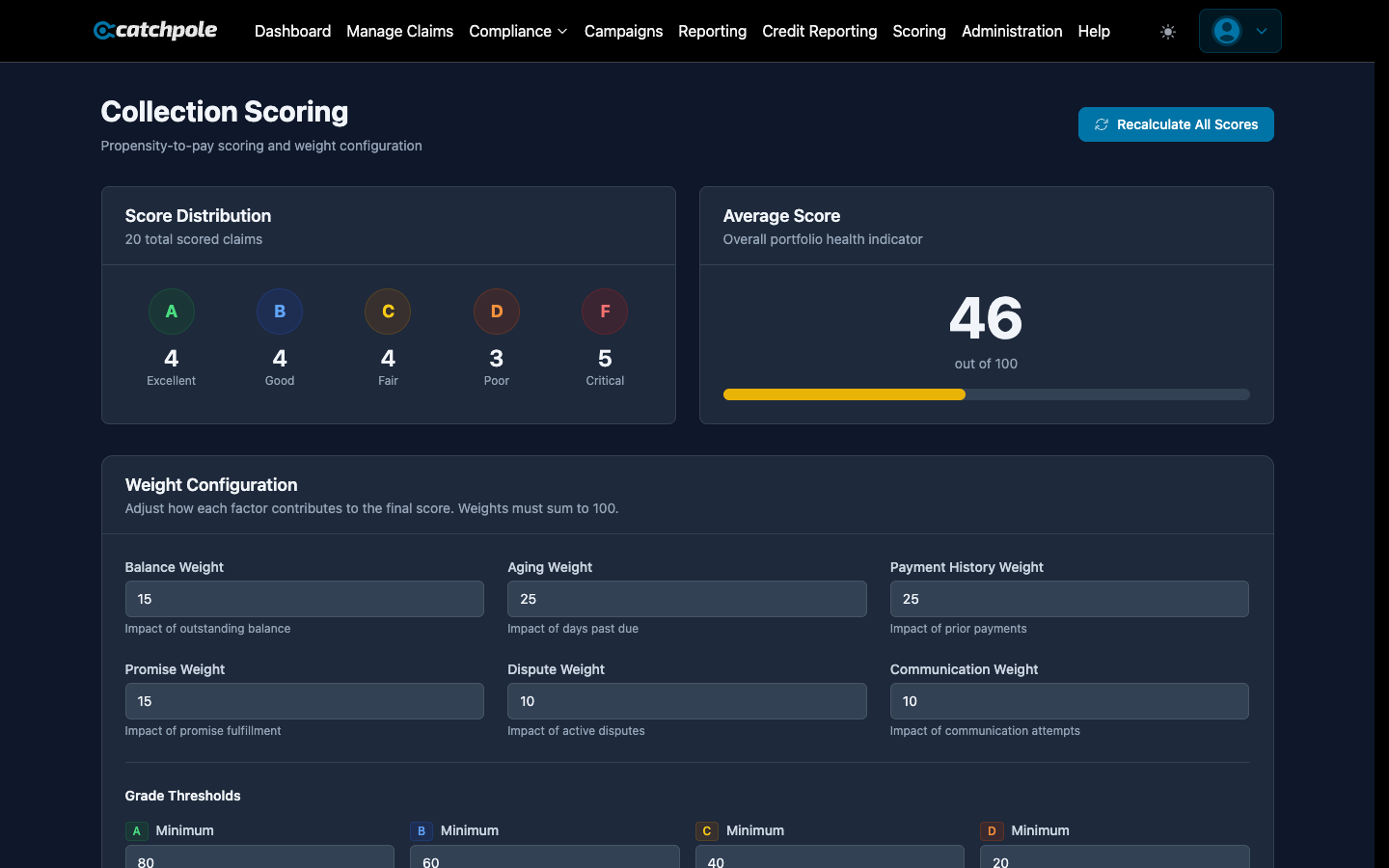
Collection Scoring assigns a numerical score and letter grade (A through F) to each account, helping your team focus on the accounts most likely to pay.
How Scoring Works
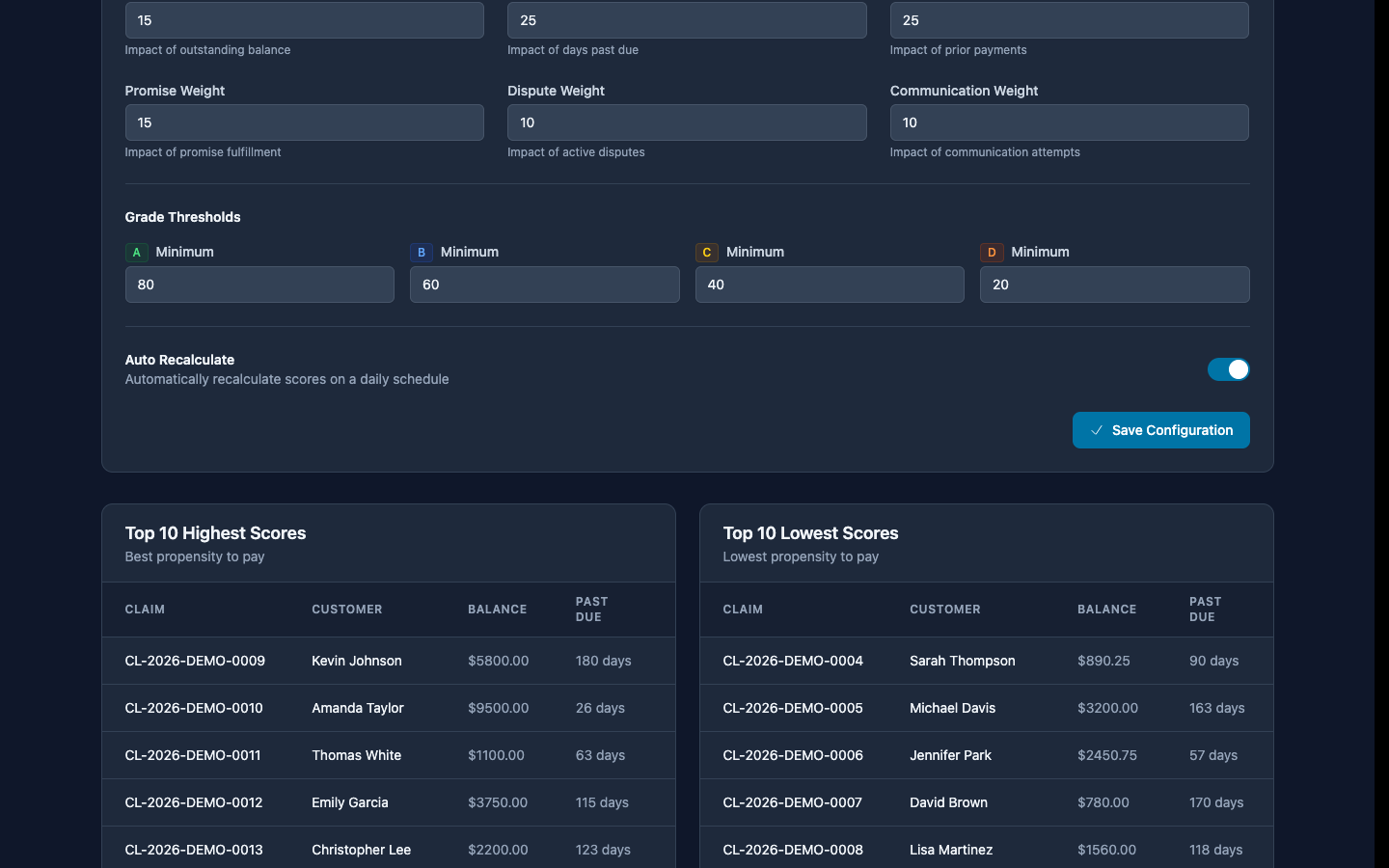
Each account is evaluated on multiple factors:
- Payment history — past payment behavior and patterns
- Account age — how long the debt has been outstanding
- Balance — current outstanding amount
- Contact history — responsiveness to outreach
- Promise history — whether the debtor keeps promises
These factors are weighted and combined into a score from 0-100.
Score Grades
- A (80-100) — high likelihood of payment, prioritize these
- B (60-79) — good potential, worth active pursuit
- C (40-59) — moderate potential, standard collection effort
- D (20-39) — low potential, consider alternative strategies
- F (0-19) — minimal potential, review for write-off or legal action
Scoring Rules
Configure your scoring model at Scoring > Rules:
- Set the weight for each scoring factor
- Define thresholds for grade boundaries
- Choose recalculation frequency (daily, weekly, or on-demand)
Using Scores
Scores appear throughout the platform:
- Smart Queue — accounts are ranked by score for prioritized work
- Customer 360 — the score card shows grade, score, and contributing factors
- Dashboard — grade distribution chart shows portfolio health
- Reports — filter and segment by score grade
AI Propensity to Pay
In addition to the collection score, the AI calculates a Propensity to Pay percentage for each account — predicting the likelihood of payment based on behavioral patterns. This appears alongside the score in the Smart Queue.